Dance Ensemble Arte Movimento
Submitted by Marii on
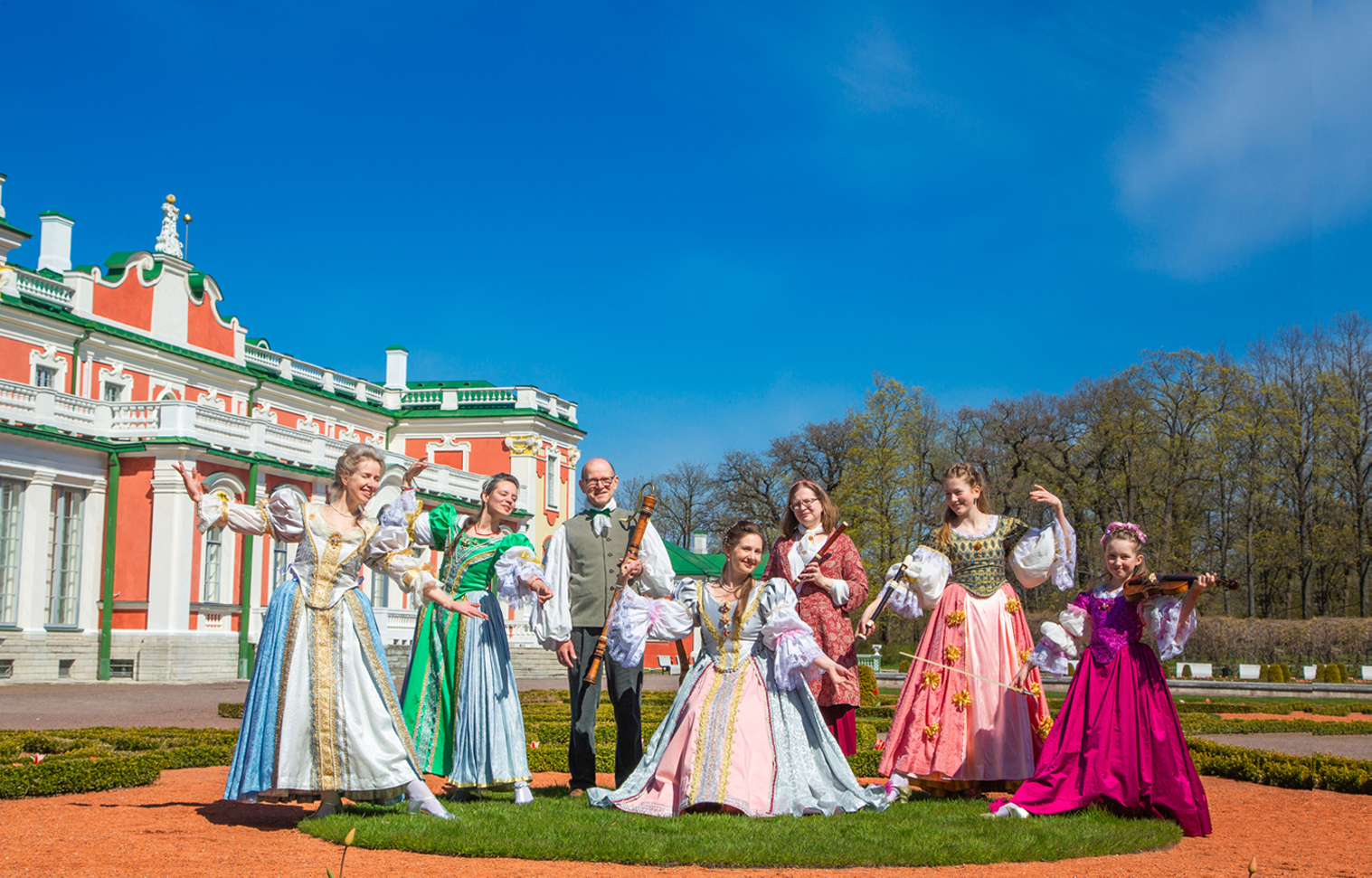
Something good and beautiful is usually brought to life when people, who love what they do, come together. This is how dance ensemble Arte Movimento was born. Brought together by mutual interests and values and starting dancing for personal joy and necessity, it has now come about that we share this joy and delight of dancing with a larger audience.   This feeling of delight is brought about by the dances that have been danced in Europe throughout centuries. Baroque dances such as the decorous courante, the romantic sarabande, the fast and upbeat passepied, the cheerful gigue or dances from the renaissance such as the flowing and graceful bassadanza or the temperamental tourdion. There are an abundance of choices.   We also find that the right costumes are very important to get to the spirit of the era for both the dancers and the audience. For example, the abundance of fabric allows you to feel the spaciousness and emphasize the speed of movement. The patterns for the costumes are made by a group member Marii and each costume is made by a member of the company.   The creative force of the Arte Movimento ensemble and dance school is Kristine Esko, a former professional dancer and a 2005 European Champion in Ten Dance now specialising in teaching.   The ensemble is based in Estonia.
  • Dance group
  • Medieval
  • Renaissance
  • Baroque
  • Playford
Marii

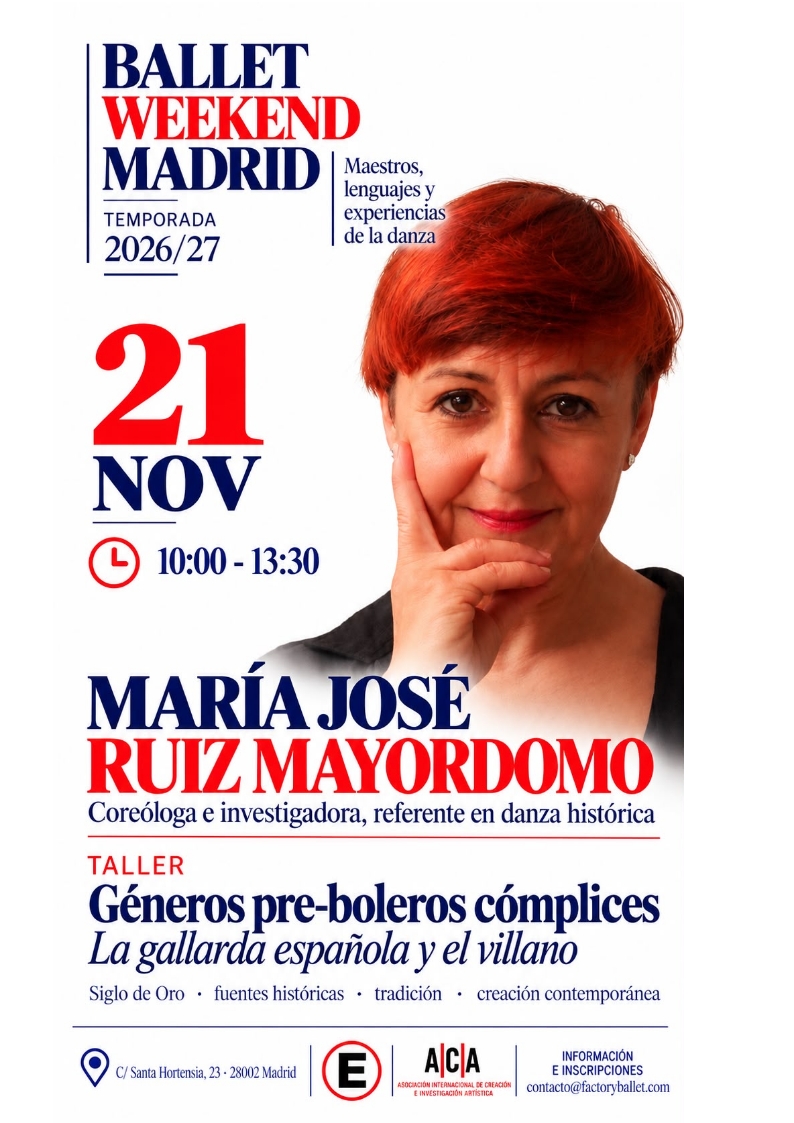
Géneros pre-boleros cómplices: La Gallarda Española y el Canario - Pre-bolero genres with a shared spirit: The ' spanish Gallarda' and 'El Canario'

A choreographic symbiosis with universal consequences during the Spanish Golden Age.

There is no need to emphasize Spain’s dominant role in the choreographic landscape of European courts during the 17th century.

To cite just one example, Voltaire himself acknowledged that before Louis XIV, everything at the French court was Spanish.

These choreographic pathways facilitated the spread of Spanish dance across the known world, leaving echoes that would endure through the shaping of choreographic-stage language during Romanticism and the Silver Age, as well as the emergence of new dance movements throughout the 20th century—trends that continue into the 21st century.

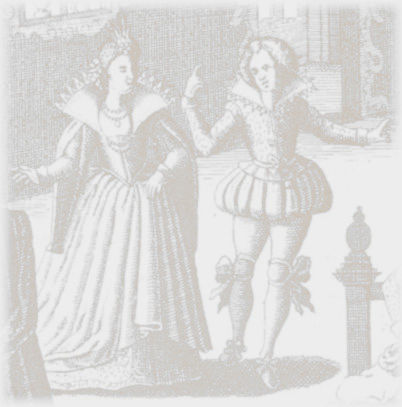
This conference will explore the interplay between two seemingly opposite genres: the *Gallarda*, an aristocratic dance, and the *Villano*, a parodic dance based on the archetype of the vulgar dancer.

By examining Spanish manuscript dance sources from the mid-17th century and comparing them with similar sources from the early 18th century—once the change of dynasty had taken hold—dance professionals will gain insight into the possibilities for contextualizing, deconstructing, and utilizing these elements within contemporary concepts and aesthetics.


Una simbiosis coreográfica de consecuencias universales durante el Siglo de Oro Español.

No es necesario destacar el papel preponderante español en el paisaje coreográfico de las cortes europeas durante el siglo XVII.

Por poner un ejemplo, el mismísimo Voltaire reconoce que antes de Luis XIV, todo era español en la corte francesa.

Las autopistas coreográficas propiciaron la expansión de la Danza Española por el orbe conocido, de tal modo que los ecos perdurarían tanto en la conformación del lenguaje coreoescénico durante el romanticismo, la edad de plata y la eclosión de las nuevas corrientes dancísticas a lo largo del Siglo XX que tienen continuación en este siglo XXI.

En este a conferencia, se explorará la complicidad entre dos géneros aparentemente opuestos: La Gallarda como danza aristocrática y el Villano como baile paródico sobre el arquetipo del danzante vulgar.

A partir de las fuente coréuticas manuscritas españolas de mediados del siglo XVII y su comparación con el mismo tipo de fuentes a comienzos del siglo XVIII - con el “cambio de dinastía” asentado- será posible comprender y entender las posibilidades de contextualización, deconstrucción y utilización de elementos dentro del concepto y estética contemporáneas por parte de los profesionales de la danza.


  • Workshop
  • Spanish baroque
  • Professionals

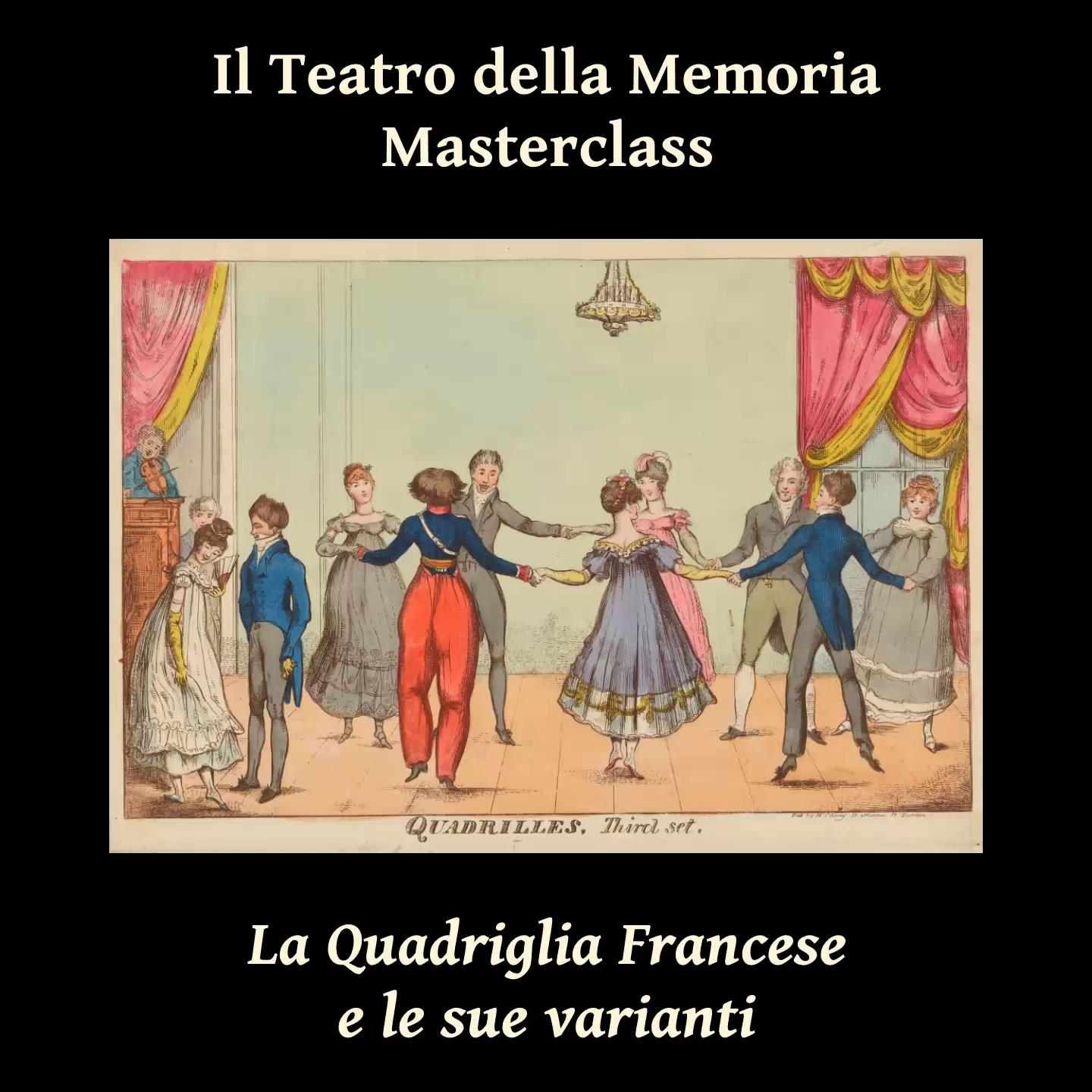
“La Quadriglia Francese e le sue varianti”. Masterclass with Paolo Di Segni

Two sessions on 19th-century social dance in Rome (Italy) on November 7 and 8 Information (in Italian) and registration links are available on our blog at this link Following the sessions on *Les Valse Quadrilles*, the historical dance events presented by Il Teatro della Memoria for the 2026/27 season continue with a weekend workshop led by Paolo Di Segni. Focusing on one of the 19th century’s most emblematic choreographic forms—*Le Quadrille français*—the workshop will compare various versions documented in dance manuals throughout the century. The weekend of November 7–8, 2026, is structured into two distinct modules; participants may attend both or just one. Module A – Saturday the 7th: 15:00–17:00 – 17:30–19:30 Module B – Sunday the 8th: 10:30–12:30 – 13:30–16:00 Venue: Centro Samila in motus – Via Costantino Beltrami 25 – Rome (San Saba area – Metro B Piramide and FS Ostiense). Take advantage of the reduced "early bird" registration fee until October 27th!


  • Workshop
  • Quadrilles
  • All levels

Renaissancetanz auf Schloss Ortenburg

Submitted by Jadwiga on

Auf zum wunderschönen Schloss Ortenburg!
Am Wochenende 16.-18. Oktober 2026 findet dort ein Renaissancetanz-Kurs statt, der auch geeignet ist für Beginner oder Quereinsteiger.
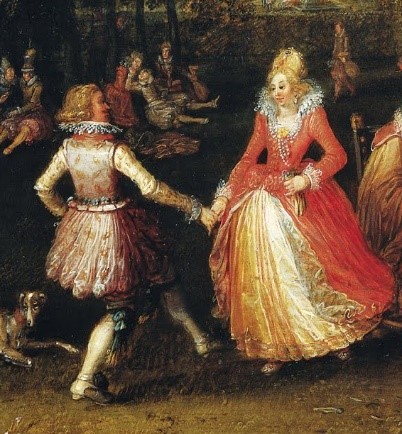
Die wunderbare Ästhetik des Renaissancetanzes, Feinheit gepaart mit Vitalität, Schwung mit zurückhaltender Noblesse ist immer von Neuem eine Herausforderung, immer aber auch beglückend. Wir haben den Vorzug, in dem schönen Gräfinnensaal auf einem renovierten historischen Holzboden zu tanzen und wollen uns vom Genius loci inspirieren lassen. Die Tänze, teils langsam, teils schnell, spiegeln das Tanzrepertoire der Zeit um 1600 wieder. Wir tanzen  Schreittänze wie Pavane  oder Allemanden, eine lebhafte Courante,  Kreistänze und Country Dances. Je nach Lust und Laune werden auch lebhafte Sprungtänze oder ein leichtes italienisches Balletto zu unserem geselligen Vergnügen beitragen.
Die Anmeldung erfolgt über die VHS Passau:
https://www.vhs-passau.de/kurs/kultur/tanz/historische-taenze/historischer-tanz-renaissancetanz-tage-mit-jadwiga-nowaczek/262292950
 

  • Workshop
  • Cinquecento
  • Beginner

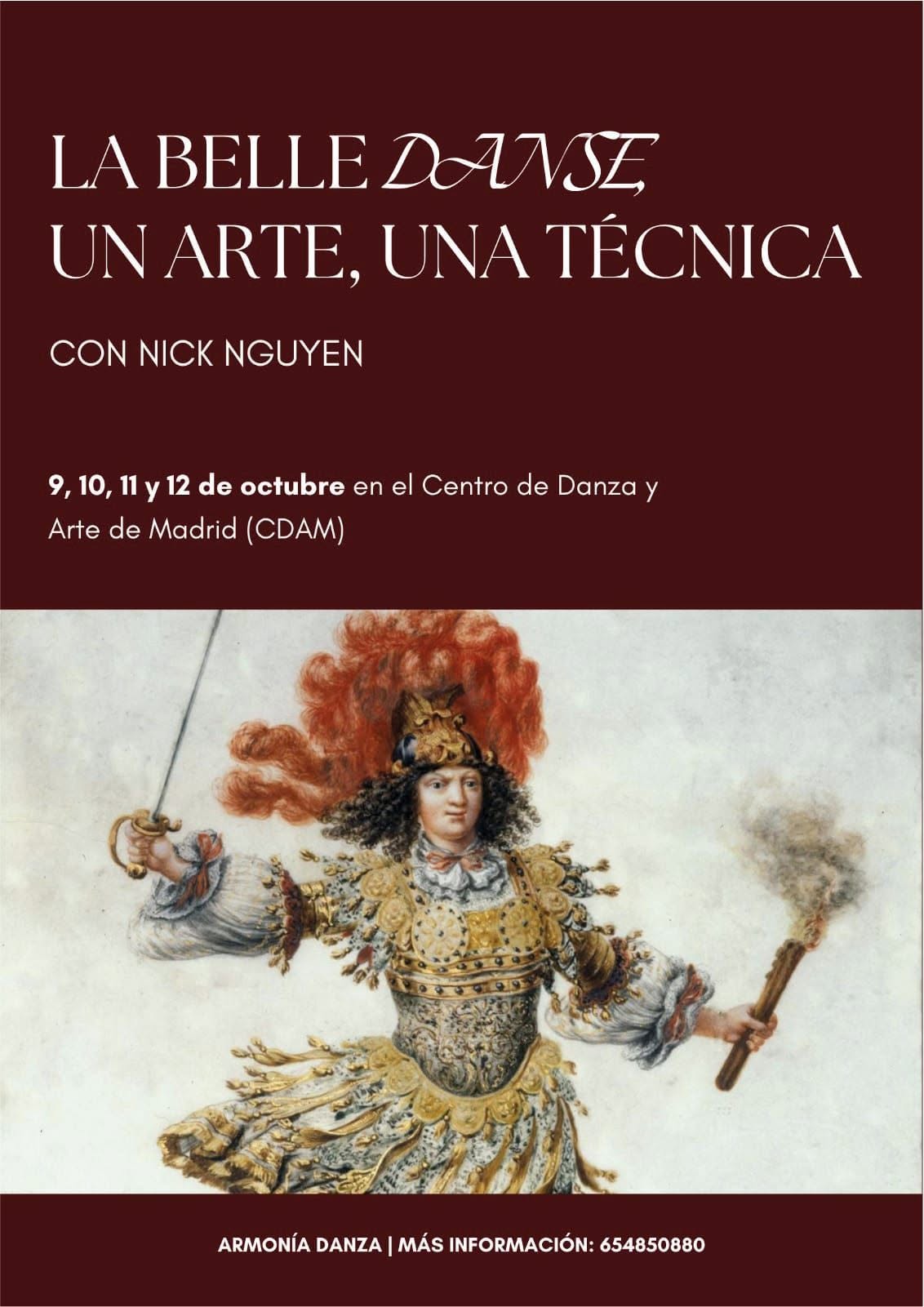
" La belle danse, un arte, una técnica "

Submitted by Sofia on

El curso impartido por el gran coreógrafo y bailarín Nick Nguyen, se distribuirá primero en tres horas diarias dedicadas al trabajo sobre un solo coreográfico para hombre o mujer del repertorio. La coreografía no será más que un pretexto para continuar el trabajo del curso técnico, abordar la musicalidad, comprender la lógica del coreógrafo en la secuencia de pasos que ha escrito, abrir posibilidades de propuestas de interpretación.

 Invitamos a que los bailarines utilicen las herramientas del curso técnico para enriquecer su «elocuencia», que descubran en sí mismos una libertad de expresión y de afectos coherente con su personalidad, la coreografía en su contexto escénico y la relación musical tan importante. El objetivo de este curso será trabajar en técnica de danza, estilo barroco y repertorio.

Otras dos horas diarias se dedicarán a la técnica y al estilo:

– calentamiento inspirado en una barra clásica, pero en el medio y en coordinación con brazos barrocos: pliés, battements tendus, battements jetés, rond de jambe au sol, demi coupés.

– revisión de pasos básicos, técnica de giro, saltos, batería pequeña

– Secuencias coreográficas compuestas para trabajar las diferentes cualidades de los movimientos, la suspensión, el equilibrio, el contacto y el uso de soportes en el suelo

Profesor:  Nick Nguyen
Fecha: 9, 10, 11 y 12 de octubre ( 5 horas diarias ) 
Horario: de 10 a 14h y de 16 a 18h

Lugar: CDAM. Escuela de Danza y Arte de Madrid
Precio: 180€ antiguos alumnos/ 220€ precio general

Incripción: Bizum al +34 654 85 08 80 o transferencia a ES16 0182 6678 9002 0169 5222 (en ambos casos indicar nombre, apellido y nombre del curso).

  • Workshop
  • Baroque
  • Intermediates
  • Advanced

IPPOLITA SFORZA

Submitted by Sofia on


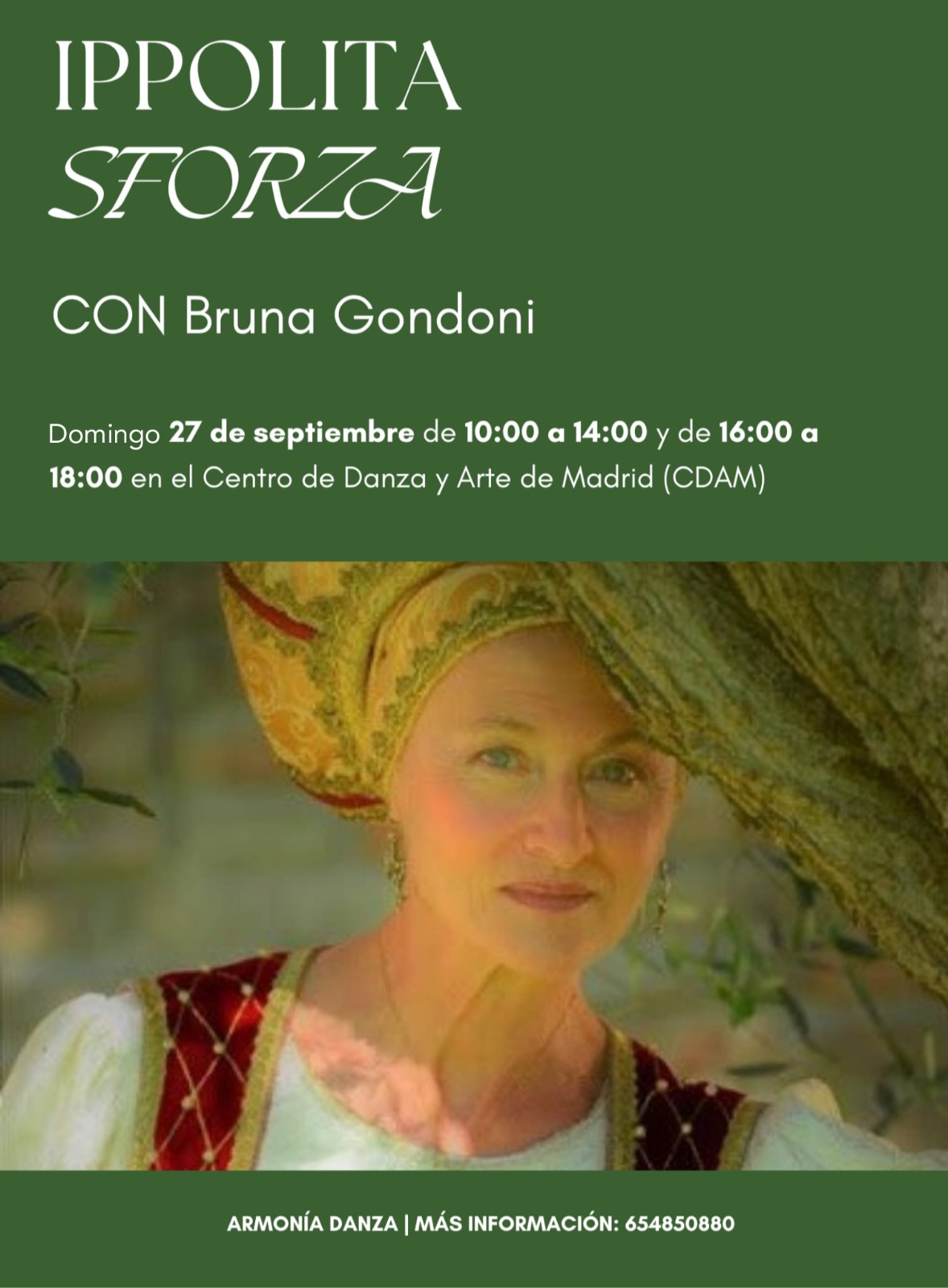
La coreógrafa y bailarina Bruna Gondoni, nos ofrecerá una conferencia sobre «Ippolita Sorza y su influencia en la corte de Aragón«. La danza en la corte de Alfonso de Aragón ya aparece en el manuscrito de Cervera, y se sabe que la moresca y la danza de los momos de Játiva se bailaba mucho, mezclándose con un estilo de bailar más refinado que Gugliegmo Ebreo y Cornazzano llevaron a Nápoles siguiendo a Ippolita Sforza. El mismo Ferrante de Aragón, le pide a Guglielmo Ebreo enseñar danza  a sus hijas Leonor y Beatriz de Aragón. 

Profesor: Bruna Gondoni
Fecha : 27 de septiembre, de 10 a 14 y de 15.30 a 18.30h.
Lugar: CDAM. Escuela de Danza y Arte de Madrid
Precio: 80€ antiguos alumnos/ 90€ precio general

Información: 654850880

  • Workshop
  • Quattrocento
  • Beginner
  • Intermediates

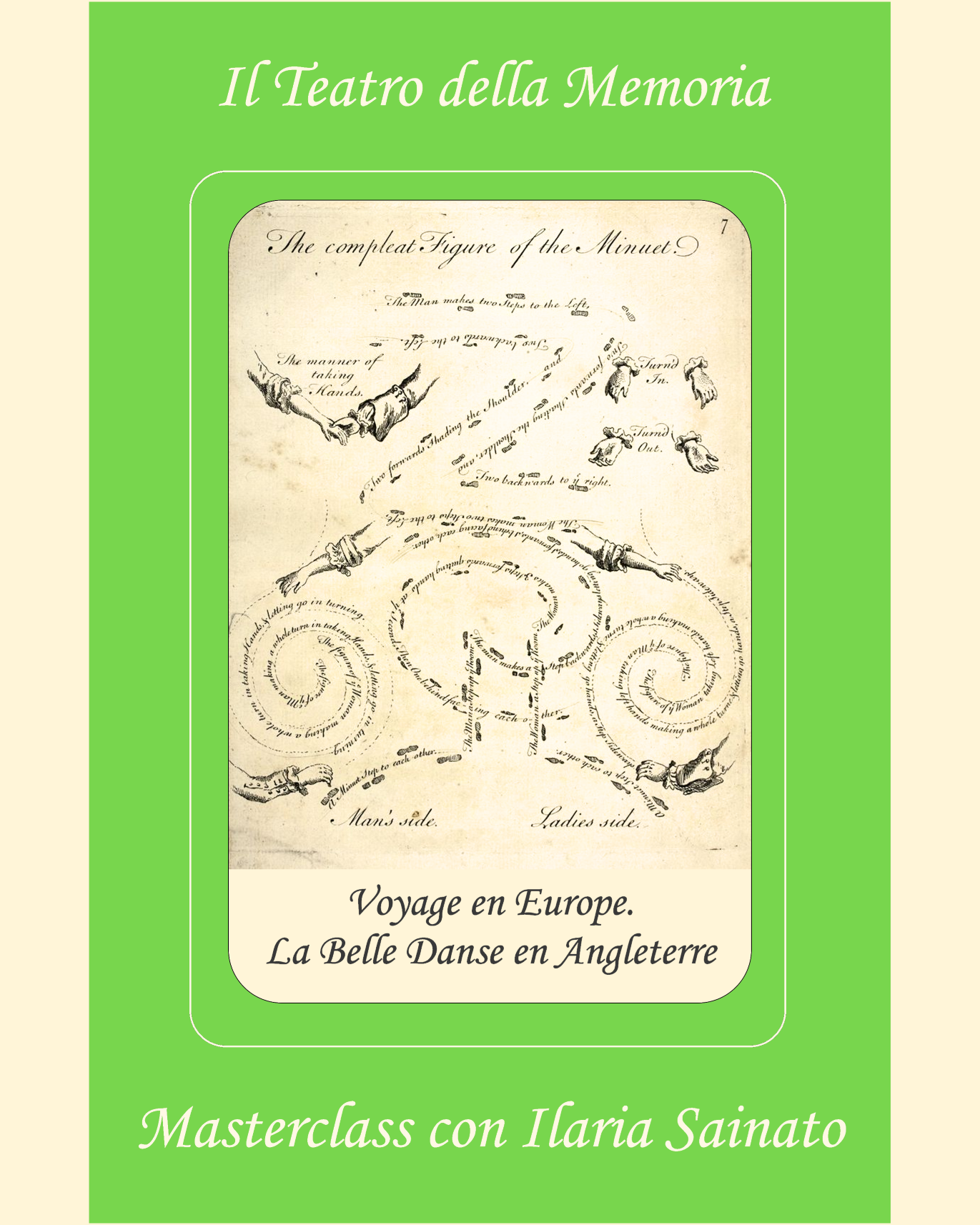
“Voyage en Europe. La Belle Danse en Angleterre”


“Voyage en Europe. La Belle Danse en Angleterre”

Baroque dance masterclass with Ilaria Sainato

The Masterclass will deal with the English testimonies of Belle Danse and the two dates will focus on choreographies reconstructed mainly on the basis of 18th-century English treatises.

The weekend October 3-4, 2026 is divided into two distinct modules; students can choose to attend both or just one. Open to students of all levels, both modules include an optional one-hour extension dedicated to deepening their understanding of Baroque technique for intermediate-advanced students.

Info in Italian about fees and registration is available at this link.

Feel free to contact us by email at info@teatrodellamemoria.org or by Whatsapp at +39-3791453193

  • Workshop
  • Baroque
  • All levels