XXIV EASTER SCHOOL OF 19th CENTURY SOCIAL DANCES
24th Easter School of 19th century dance - Società di Danza
Friday, 25 - Monday 28 March 2016
Tabiano (Parma), Italy
Società di Danza
Director: F. Mòllica
The traditional Easter School of the Società di Danza this year will be in Tabiano (Pr), in the Parmesan hills.
In a beautiful environment, we will have the opportunity to spend a few days of communuty life, and to study more in depth theoretical and practical aspects of 19 century dance.
Program: social dance of 19th century tradition.
Quadrilles, Scottish Country Dance, Contredanse Fancaise, Waltz, Polka, Mazurka and March.
With the participation as guest teacher of John Wilkison (RSCDS)
The classes will be divided into three levels.
Classes and seminars will be held both morning and afternoon and free time to enjoy the spa.
The evenings will be devoted to parties.
Staying at the Grand Hotel Astro.
From Friday evening at dinner to Monday morning at lunch.
_______
Program
Friday, 25.3.2016
Afetrnoon: arrival
Evening: Theoretical seminar: tradition of 19th century social dance
Saturday, 26.3.2016
Morning: Classes of Quadrille, Scottish Country Dance, Waltz
Afternoon: Classes of Mazurka, Scottish Country Dance, Contradanse Francaise
Seminar on the history of dance
Evening: Party of 19th century dance
Sunday, 27.3.2016
Morning: Classes of Quadrille, Scottish Country Dance, Mazurka
Afternoon: Classes of Waltz, Scottish Country Dance, Polka
Seminar
Evening: Party of Scottish Country Dance
Monday 28.3.2016
Morning: Classes of Quadrille, Scottish Country Dance, Mazurka and Polka
Farewell Party
___________For further information contact: Società di Danza
- Workshop
- 19th century
- All levels
Es muss ein Stück vom Himmel sein...
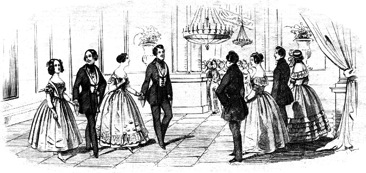
Dance week in Vienna with Quadrilles, Polkas and Mazurka. Fancy Dress Ball, Tea Dance, Grand Strauss Ball.
- Ball
- Course
- 19th century
- Quadrilles
- Waltz
- All levels
Tänzerische Reise in die Zeit von Jane Austen
Jane Austens Romane geben uns einen Einblick in die Zeit um 1800, in der das Tanzen eine wichtige gesellschaftliche Rolle einnahm.
Im Seminar tanzen wir vor allem Tänze, die aus Filmen nach Jane Austens Romanen bekannt sind und schauen uns in den Tanzpausen die entsprechenden Szenen in Filmausschnitten an:
Pride and Prejudice, Emma, Mansfieldpark, Northanger Abbey und Sense and Sensibility
Einzelpersonen sind ebenso willkommen wie Tanzpaare. Gerne können auch Kinder (ab 8 Jahren) in Begleitung Erwachsener mittanzen.
Termine: Samstag, 12.11.16, 16:00 - 20:00 Uhr
Sonntag, 13.11.16, 10:00 - 16:00 Uhr
Ort: VHS-Haus, Marktgraben 10, 3. Stock, Raum 6 (Saal)
Kosten: € 72,-
In Zusammenarbeit mit der Arbeitsgemeinschaft Volkstanz Tirol.
Auskünfte und Anmeldungen im Büro der Volkshochschule Innsbruck, Marktgraben 10, Tel. (0512) 58 88 82-0, innsbruck@vhs-tirol.at,
www.vhs-tirol.at
- Workshop
- 19th century
- Regency
Waverley Ball
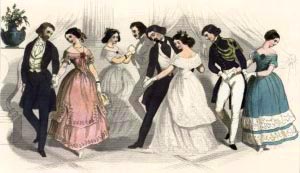
The popularity of the historical novels of Sir Walter Scott (a contemporary and favourable reviewer of Jane Austen) gave rise to costumed balls to which guests would come dressed as characters from his novels (his first in 1814 entitled ‘Waverley’) and groups of friends would try and costume to the same theme for the opening quadrille. Soon any historical dress was acceptable and Waverley balls were even being held in Australia and New Zealand.
Let’s revive the glory! Any dress from the Medieval to Georgian era, or something Regency, Scottish or from the 1840s (the height of the craze) will be equally appropriate. The evening will feature dances from the 1820s-40s (as previewed in daytime workshops), a dinner break, a desert break, a costume parade, prizes, displays and lots of farewell fun!
Calling is in English by John Gardiner-Garden. Daytime dance classes offered at http://janeaustenfestival.com/program/
- Ball
- Rococo
- 19th century
- Quadrilles
- Regency
- Costumes
- All levels
Compagnie Aliquam Amentis - danses anciennes et traditionnelles
La compagnie Aliquam Amentis propose des cours de danses anciennes et traditionnelles pour adultes de tous niveaux. Il est possible de nous rejoindre à tout moment de l’année.
Répertoire
Lors des cours, les danses de différents pays et époques sont enseignées par plusieurs moniteurs pédagogues, formés dans des stages par des enseignants et chorégraphes reconnus. Ainsi, durant la même séance, on abordera aussi bien des danses de la Renaissance que des États-Unis, de la Belle Époque ou de Roumanie. Les danses enseignées sont donc très diversifiées et se pratiqueront en ronde, en quadrille, en ligne, seul, en couple, etc…
La compagnie cherche à prodiguer un enseignement de qualité, dans le respect de la tradition, tout en conservant une ambiance sympathique et bon enfant. Nous accueillons des danseurs de tous niveaux, unis par leur envie de bien danser ensemble. Il n’est pas nécessaire de commencer au début d’un semestre: vous pouvez nous rejoindre tout au long de l’année, seul ou en couple.
Dates
Les cours se donnent un mercredi sur deux, de 19h30 à 22h, sauf pendant les grandes vacances. Des changements pouvant survenir, n’hésitez pas à nous contacter avant de venir pour ne pas vous retrouver devant une porte fermée.
Nos prochains rendez-vous en 2015:
◾9 et 23 septembre
◾7 et 28 octobre
◾4 et 18 novembre
◾2 et 16 décembre
◾6 et 20 janvier
◾3 et 17 février
◾2,16 et 30 mars
◾Du 2 au 5 avril – Stage: Voyage dansé sous le premier Empire
◾13 et 27 avril
◾11 et 25 mai
◾8 et 22 juin
- Ongoing classes
- French Renaissance
- Tudor
- Playford
- 19th century
- Regency
- Costumes
- All levels
Voyage dansé sous Napoléon 1er- Stage 4 jours de danse premier empire avec Yvonne VART (Belgique)
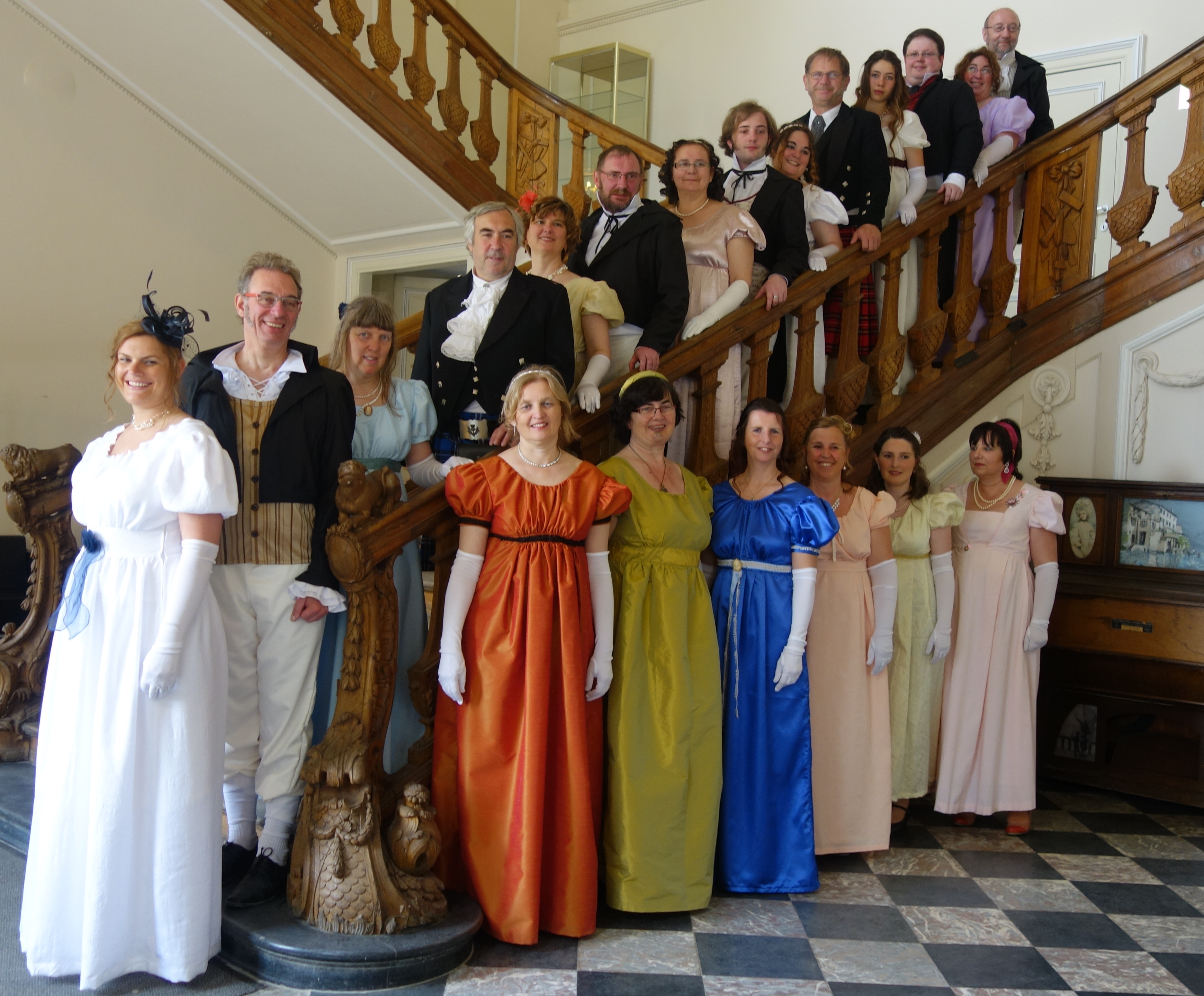
« Voyage dansé à la cour de Napoléon 1er »
Danses à figures françaises du premier Empire avec Yvonne VART (Compagnie Révérence, Lyon).
Forts du succès des stages de 2011 et 2014, l’asbl Un village au coeur du monde (Néthen), La Saltarelle (Wavre), la Ballotine (Limal) et la compagnie Aliquam Amentis (Bruxelles) organisent un troisième stage de danses anciennes, du 2 au 5 avril 2016 à Néthen (Brabant Wallon). Venez découvrir l’esprit d’un autre temps avec un programme de contredanses et quadrilles français, concocté d’une main de maître par Yvonne Vart.
Le stage sera également l’occasion de plusieurs animations et festivités ouvertes à tous: bals, festin, cinéma…
- Workshop
- 19th century
- Intermediates
From Six to Twenty-four: German figure dances of 1835
10 am – 5 pm
ISTD2 Dance Studios, First Floor Studio, 346 Old Street, London, EC1 9NQ
Dances from "Der selbstlehrende Tanzmeister" by J. F. Häcker, a German Source of 1835. In the first decades of the 19th century new dances like "Kegelquadrille" for 9 dancers, "Seize" for 8 couples "Vingt quatre" for 12 couples or "Doppel Ecossoise" for two connected longways offered a large range of new possible figures. Still using some of the late 18th century dance steps the focus of these dances moved to ingenious ways of letting a large number of dancers form beautiful new patterns.
Tutor: Isabel Suri, Switzerland. Well-known for her extensive experience and understanding of these dances, Isabel will guide participants through the figures and steps with great skill and enjoyment.
Students will benefit from attending both days, but participation on one day only is possible.
Places are limited so book early to guarantee your place.
- Workshop
- 19th century
Walzer -Tanzkurs - Der Walzer und seine Verwandten
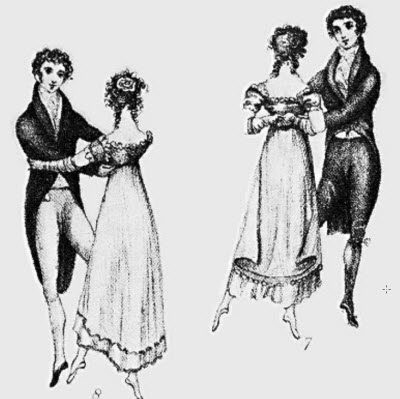
„Kein Tanz war und ist so verbreitet wie der Walzer, den man heute überall in der Welt hören kann... Kein anderer noch gängiger Gesellschaftstanz hat sich derart lange halten und so viele gesellschaftliche Umbrüche und Revolutionen überdauern können wie dieser. Aus ländlichen Rundtänzen war das Walzen im Dreiertrakt mit der typischen Akzentuierung auf dem ersten Taktteil, dem ausgreifenden Schritt und dem forschen Tempo hervorgegangen. Zunächst wurde dieser Tanz wegen der schnellen Drehung von der Obrigkeit gekämpft und diskriminiert, noch vor 1800 vermochte er sich jedoch in allen Klassen durchzusetzen. Dieser Prozess ging mit dem Abbau absolutistischer Machtstrukturen und der schrittweise erfolgten Demokratisierung einher...“
(Walter Salmen „Tanz im 19. Jh.“, 1989)
Wir gehen in diesem Walzer-Tanzkurs zurück zu den Anfängen des Walzers und lernen frühe Walzerschritte und -formen kennen wie „Deutscher“, „Ländler“, „Hopswalzer“, „Triolet-Walzer“. Wir üben verschiedene Armfassungen ein und schliesslich erproben wir uns auch im Wiener-Walzer, damit wir für die nächste Ball-Saison gewappnet sind!
Daten: 21. und 28. Okt.; 4., 11., 18. und 25. Nov.; 2. und 9. Dez. 2015, jeweils 19.00-20.30 Uhr
Kursort KHG St. Arbogast, Hohlandstr. 7, 8404 Oberwinterthur
Infos und Anmeldung Bernhard Gertsch, Haldenstr. 82a, 8400 Winterhur, Tel. 052 213 14 26, Mob. 079 586 31 09. E-Mail berngertsch@bluewin.ch
Kosten Fr. 350.-* Einzeltarif, Paare Fr. 600.-.
Zahlungskondition: Im Voraus auf Konto Bernhard Gertsch, Postfinance
IBAN CH84 0900 0000 8013 5608 3 oder bar am 1. Kursabend.
* Preisabweichung gegenüber Jahresprospekt (nur 8 Kursabende!)
- Workshop
- Ongoing classes
- 19th century
- Waltz
Menuet & Waltz - Tänze um 1800

Tänze der Zeit von Jane Austen
Tänze um 1800

Verstand & Gefühl, Stolz & Vorurteil, Mansfieldpark, Emma
und die anderen Romane von Jane Austen stehen heute für die Zeit des Empire.
Oft als Trivialliteratur belächelt und verkannt
sind ihre Werke herausragende und fesselnde Zeugen einer Epoche.
Sie gehören mit zu den meistverfilmten Büchern und lieferten den Stoff für viele weitere.
Oft spielen Tanzszenen eine Schlüsselrolle in diesen Romanen.
Vor allem die Verfilmungen der BBC zeichnen sich dabei
durch die Verwendung originaler historische Tänze aus.
Im Rahmen des Großen Jane Austen Balls 2016 finden zwei ganz erlesene Tanzkurse statt.
Mit Letizia Dradi konnte ich nun eine in Deutschland
noch recht unbekannte Tanzmeisterin und Expertin
des historischen Tanzes für den Kurs gewinnen.
Obwohl Sie schon in Ihrer Mitwirkung
bei der Oper "Cephale et Procris" (J. de la Guerre)
im Markgräflichen Schauspielhaus, Bayreuth, 2009,
Choreografie: Nick Nguyen, das deutsche Publikum begeisterte.
Außerdem begeisterte sie schon die Teilnehmer des Workshops vor dem ersten Ball 2012.
Mit Pia Brozca konnte ich noch eine weitere Tanzmeisterin und Expertin
des historischen Tanzes für den Kurs gewinnen.
Diese Kurse wechseln sich ab.
Sieben Stunden pures Tanzvergnügen.
Sind aber auch nur einzeln
(unabhängig von Ball bzw, voneinander) buchbar.
Dozent:
Letizia Dradi
Mailand
Programm:
Tänze um 1800

Menuet Congo
Nouvelle Méthode
pour apprendre l'art de la dance
Guglielmo Brives, Toulouse, 1789
Das Menuett
Schritte und Choreographievarianten um 1780

Collezione di musica a ballo
de' più celebri autori di Parigi e Londra
Guglielmo Piatti, Firenze, 1805

Samling af de nyeste Engelske Dantse
Hans Hinrich Jacobsen, Copenhagen, Gyldendal, 1780
Der Kurs findet in Englisch statt.
J A N E . A U S T E N . D A N C E S . I I
Workshop mit Tänzen um 1800
mit Pia Brocza, Wien
für Tanzerfahrene & Fortgeschrittene
29. März - 1. April 2016 • Kulturzentrum • Ansbach
In diesem Kurs liegt das Hauptaugenmerk am variantenreichen Walzer
des beginnenden 19. Jahrhundert.
Tanzmeister wetteiferten damals mit genauen Beschreibungen
unterschiedlicher Walzerschritte
(Wiener, Zephyr, Balancer Walzer u.a.m.)
Zudem war das Walzen so beliebt,
dass es gerne als eigene Tour in zahlreichen Kontratänzen
eingebaut wurde und Tanzformen wie Wechselwalzer
oder Triolet Walzer boten die Möglichkeit mehrere Damen
zugleich aufzufordern.
Um nicht dem Schwindel zu erliegen und wie Mehlsäcke zu stürzen,
wie es 1808 in einem Wiener Ballsaal beobachtet wurde
(nachzulesen in Adolf Bäuerle´s Memoiren, Wien, 1820),
gibt´s auch Tanzformen und –schritte ohne wirbelnde Drehungen!
Langsamer Walzer, Wiener Walzer, Balancer Walzer, Zephyr Walzer (Walzerschritte)
Wechselwalzer, Triolet Walzer (Walzerformen)
Longways und Quadrillen mit eingebauten Walzertouren
Ecossaise, Francaise, Contredanse und Quadrille des beginnenden 19. Jh.
Die Choreographien entstammen Tanzlehrbüchern von
J. G. Häcker (1835), E. D. Helmke (1829), Th. Hentschke (1836),
Ch. Länger (1824), G. Link (1792) und anderen.
Dozent:
Pia Brozca
Wien
Programm:
Tänze der Jane Austen Zeit
Tänze um 1800 Deutscher & Französischer Walzer
Tänze und Quadrillen von Länger, Hentschke, Häcker & Helmke
Walzer:
Walzerschritte aus Lehrbüchern des beginnenden 19. Jahrhunderts:
Langsamer Walzer, Balancer Walzer, Wiener Walzer,
Zephyr Walzer, Ecossaisen Walzer
Choreographische Variationen des Walzers:
Wechselwalzer, Triolet Walzer, Russischer Walzer
Der Walzer als beliebte Figur in Anglaisen
(Walz-.Anglaise von Häcker),
Ecossaisen und Quadrillen
Beispiele und Choreographien entstammen Tanzlehrbüchern von:
Eduard Helmke, Hentschke, Georg Link, Carlo Blasis, Gourdoux-Daux und anderen
Gourdoux-Daux, J.H. (1830). Die Tanzkunst als Bildungsmittel der Jugend. Wien.
Hentschke, Th. (1836). Allgemeine Tanzkunst. Stralsund.
Durang, Ch. (1856). The Fashionable Dancer`s Casket. Bedford, Massachusetts.
Helmke, E. D. (1829). Neue Tanz- und Bildungsschule. Leipzig.
Kattfuß, J. H. (1800). Taschenbuch für Freunde und Freundinnen des Tanzes. Leipzig.
Häcker, J. G. (1835). Der selbstlehrende Tanzmeister, oder… . Grimma.
Wilson, Th.
Link, G. (1792). Vollkommene Tanzschule. Celje.
Außerdem:
Quadrille, Contredanse, Ecossaise und Francaise
Die Choreographien entstammen:
Aus den Jahren 1789 bis 1826: W. G. Beckers Taschenbuch zum geselligen Vergnügen. Berlin.
Helmke, E. D. (1829). Neue Tanz- und Bildungsschule. Leipzig.
Hentschke, Th. (1836). Allgemeine Tanzkunst. Stralsund.
Link, G. (1792). Vollkommene Tanzschule. Celje.
Kursgebühr pro Kurs:
140,- € pro Kursteilnehmer pro Kurs
*die Kursgebühr pro Person pro Kurs
125,- € für Studenten***
die Kursgebühr pro Person pro Kurs
Unterkunft:
Bitte beachten Sie, dass die Unterkunft selbst gesucht
und gebucht werden muss.
Übernachtungsmöglichkeiten hier klicken.
Mitzubringen:
Leichte Tanzbekleidung und –schuhe
(Tanzschläppchen oder Jazztanzschuhe).
Anmeldeschluss:
15.12.2015
(zu diesem Datum entscheidet sich ob die Kurse stattfinden können)
Teilnehmeranzahl:
12-32 Kursteilnehmer
Jeder Kurs kann auch einzeln und unabhängig vom Ball
oder den anderen Kursen und Veranstaltungsangeboten gebucht werden.
Beginn:
29.3.2016
ab 10:00 Uhr
Ende:
1.4.2016
um ca. 18:00 Uhr
Veranstaltungsort:
Kulturzentrum am Karlsplatz
Karlsplatz 7/9
91522 Ansbach
So findet Ihr zum Kulturzentrum am Karlsplatz
hier klicken.
Anmeldung
Per Mausklick werden Sie
zur Anmeldung weitergeleitet
Kontakt:
Peter Hoffmann, Tel.: 09 11 / 21 28 108
E-Mail: info@barocktanz.com
Programm
D I E N S T A G
ab 9:30 Uhr
Anreise
10:00-10:30 Uhr
Begrüßung
10:30-12:30 Uhr
Jane Austen Dances I
12:30 Uhr
Mittagessen
14:00-16:00 Uhr
Jane Austen Dances II
16:00 Uhr
Pause
16:30-18:30 Uhr
Jane Austen Dances I
18:30 Uhr
Gemeinsames Abendessen
M I T T W O C H
ab 9:30-12:30 Uhr
Jane Austen Dances II
12:30 Uhr
Mittagessen
14:00-16:00 Uhr
Jane Austen Dances I
16:00 Uhr
Pause
16:30-18:30 Uhr
Jane Austen Dances I
18:30 Uhr
Gemeinsames Abendessen
D O N N E R S T A G
ab 9:30-12:30 Uhr
Jane Austen Dances I
12:30 Uhr
Mittagessen
14:00-16:00 Uhr
Jane Austen Dances II
16:00 Uhr
Pause
16:30-18:30 Uhr
Jane Austen Dances II
18:30 Uhr
Gemeinsames Abendessen
F R E I T A G
ab 9:30-12:30 Uhr
Jane Austen Dances II
12:30 Uhr
Mittagessen
14:00-16:00 Uhr
Jane Austen Dances I
16:00 Uhr
Pause
16:30-18:30 Uhr
Jane Austen Dances I
18:30 Uhr
Ende des Workshops
18:30 Uhr
Gemeinsames Abendessen
- Workshop
- 19th century
- Regency
- Waltz
- Intermediates
- Advanced
- Professionals
International Dance Summer School - Ballroomdances of the 19th century
3rd .creanc. International Dance Summer School 2016 from 31.7 to 7.8.2016 in Vienna
Ballroom dances from the period 1830 to 1900
Course 1 from Sunday 31st July to Sunday 7th August 2016 Course 2 from Thursday 4th August (at 2.30pm) to Sunday 7th August 2016 Grand Ball on Saturday 6th August 2016 at the Vienna Imperial Palace (Hofburg)
English: http://creanc.com/.creanc.InternationalDanceSchool-Vienna2016.pdf
German: http://creanc.com/.creanc.InternationaleTanzschule-Wien2016_Balltanz.pdf
The Dances
The course programme includes 19th century ballroom and social dances from Europe and North America, danced to the musical pieces composed by the members of the Strauss family. We shall introduce three new dances: (1) Strauss Quadrille, consisting of six figures, La Bohémienne (polka with music by Johann Strauss, Son), La Varsovienne (varsovienne with music by Johann Strauss, Father), La Rhénane (rheinländer polka, music by Josef Strauss), La Britannique (galop, music by Eduard Strauss), La Parisienne (mazurka-waltz and redowa, music by Josef Strauss) and finale La Viennoise (waltz, music by Johann Strauss, Son). All were favourite couple dances in the 19th century, and here they are set in typical quadrille formation to the potpourri of well liked Strauss tunes. The dances have been choreographed by Sylvia, with authentic steps and formations, and dedicated with gratitude to the Viennese Strauss family composers for their great achievement in giving dancers such a variety of tunes to dance to. (2) Cellarius Polka Quadrille became well known in the 19th century. It consists of six parts and was devised by Jules M. Martin in Philadelphia in 1844 to music by Aron F. R. Conner (published in 1848). Martin dedicated this dance to his friend, the Paris dancing master Henry Cellarius. Polka was Cellarius’ favourite dance and he himself taught this dance in Paris, while in London it was made popular by Madame Lecomte and, of course, in Philadelphia it was popularised by the deviser Jules Martin. It is now resurrected for this course for the first time. (3) The Blue Danube waltz by Johann Strauss Son is the unofficial Austrian anthem, spread on each New Year’s Day throughout the world from Vienna. This charming waltz has been choreographed with authentic steps on the pattern of 19th century Viennese cotillions. It will be the high point of the Grand Ball and the orchestra will play it from the original notation.
The dance programme will be further enriched by the favourite German/Bohemian polka Bitte schön and Tringle Waltz Cotillion “Wiener Bonbons” (Viennese Sweets), based on the choreography originated from New York in 1889. Music to both dances was composed by Johann Strauss, son. The Princess Alice Waltz Quadrille was choreographed by Prof. Bland in London in 1855 and it will be danced to Strauss’ waltz “Erinnerung an Covent Garden” (Memories of Covent Garden). The mazurka-waltz Die Schwetzerin (The Chatterbos) will allow us to enjoy another dance, which together with redowa was popular in that period. The steps are based on the description by Henry Cellarius (valse simple, coup de talon, valse double) in combination with polka-mazurka and korska (sources from 1840 onwards). And music, of course, will be by Johann Strauss.
Two best known dances throughout the 19th century’s dance world were Quadrille Française and Quadrille à la cour. The first will be taught in its Viennese version to the Fledermaus Quadrille music by Johann Strauss, Son, and the second one, which is known as an especially pretty variation of The Lancers, in the Freising’s arrangement (1855/1885), again with Johann Strauss’ music. The Gisela Polka was dedicated to Gisela Louise Marie, archduchess of Austria and Princess of Bavaria, the daughter of Emperor Franz Joseph and his wife Sisi. It is a charming simple polka in the form of a rondaise.
The course will teach not only the favourite ballroom dances of the 19th century and the dance etiquette of that period, of which we should be rightly proud, but will also pay great attention to the steps and figure technique, body posture and leading technique in dance, as well as the importance of personal rapport between the dancing partners. All these attributes are necessary for enhanced pleasure and enjoyment of sociable dancing.
Course 1: Classes from Monday to Thursday
Strauss Quadrille / Cellarius Polka Quadrille / The “Blue Danube” waltz / Polka “Bitte schön” / Mazurka-waltz “Die Schwetzerin” / Waltz cotillion “Wiener Bonbons” / The Princess Alice Waltz Quadrilles
Course 1 and Course 2 joint: from Thursday 2.30 pm to Saturday
Waltz, polka and quadrille basics / Quadrille à la cour / Quadrille Française (with the international final figure) /
Edelreigen – opening dance (The Gipsy Baron) / Gisela Polka and simple dances for the Grand Ball
Dance classes timetable
Monday-Wednesday (course 1) 1st-3rd August 2016 9.15am – 5pm
Thursday (course 1) 4th August 2016 9.15am – 2.30pm Thursday (course 2) 4th August 2016 2.30pm – 5pm (optional for 1)
Friday (courses 1&2) 5th August 2016 9.15am – 4.30pm
Saturday (courses 1&2) 6th August 2016 9.15am – 12.30pm
All classes will take place in the modern sports hall of the Goethe-Gymnasium (88ft x 50ft, or 27m x15m); Address: Goethe-Gymnasium, Astgasse 3, 1140 Wien www.astgasse.net
Convenient accommodation at favourable rates is offered, if you make a reservation by 1st May 2016, at Kolpinghaus Wien Zentral (near Naschmarkt) http://www.kolping-wien-zentral.at/
Grand Ball and the Venue
Saturday 6th August 2016 6.30pm (entrance 5.30pm)
Our glittering final ball will take place in the Ceremonial Hall of the Hofburg Palace, in the heart of Vienna. It is one of the Hofburg’s grandest halls and in the past was used as the Emperor’s Throne Room.
Address: HOFBURG Wien, Heldenplatz, 1014 Wien www.hofburg.com
Preferred dress code: 19th century fashion (tails for gentlemen, ball gowns for ladies); A changing room will be available.
Music for the festive night will be provided by the Prague Ballroom Orchestra under conductor Petr Chromčák, (www.petrchromcak.com) and pianist Stephan Müller from Germany, as well as the soloists of the Vienna Operetta (Susanne Rath from Vienna and Nils Stäfe from Weimar/Erfurt in Germany).
Gourmet spread during the ball will be prepared by the catering services of the Hofburg Palace.
Cost of the International Dance Week (in pdf-description)
(1) Early booking and payment by 24th November 2015; (2) Early booking and payment by 31st March 2016; Student discount for booking by 31st March 2016
Applications
.creanc. Internationale Tanzschule für Balltanz | Sylvia Hartung Email sylvia@creanc.com or sy.hartung@t-online.de | www.creanc.com & www.balltanz.de
Welcome to Vienna in August 2016 to join an unforgettable dancing event!
and more at: http://creanc.com/geboten.html
- Summer School
- Ball
- Course
- 19th century
- Quadrilles
- Waltz
- Intermediates
- Advanced
- Professionals